Who We Represent
University of Aberdeen
Principal: Professor Peter Edwards
Route into university
Peter attended Ysgol Bryn Offa and Yale Sixth Form College, Wrexham before studying at Liverpool Polytechnic and the University of Leeds. He was the first person in his immediate family to attend university.

Academic Specialism
Transparency and accountability of computational systems.
Concise career profile
Professor Edwards was appointed Principal and Vice-Chancellor of the University of Aberdeen on 1 November 2025. He has held numerous leadership roles at the University, most recently as Senior Vice-Principal and Vice-Principal for Regional Engagement, where he focused on entrepreneurship, research commercialisation, and civic engagement. Peter joined the University of Aberdeen as a postdoctoral researcher in Computing Science in October 1988, before moving into a successful academic career that included leadership of one of the UK Research Councils’ Digital Economy Research Hubs (2009-2015). He is a Fellow of the British Computer Society (FBCS), the Institution of Engineering and Technology (FIET), and the Royal Society of Arts (FRSA).

Abertay University
Principal: Professor Liz Bacon
Route into university
Liz attended Purley High School for Girls in Coulsdon, Surrey, and studied at Thames Polytechnic. She was second in her family to study for a degree, her sister having beaten her by a year.

Academic Specialism
Computer Science specialising in Artificial Intelligence.
Concise career profile
Prior to her appointment as Abertay’s Principal in spring 2022, Professor Bacon was the University’s Deputy Principal and Deputy Vice-Chancellor. Liz joined Abertay in September 2018 and led the University’s activities in the areas of partnerships, teaching and learning, and research and knowledge exchange, while also pioneering a new Digital Strategy.
An international researcher in computer science, Liz is a worldwide speaker on a range of topics, including preparing staff and students for the fourth industrial revolution’s impact on teaching, learning and work, and improving diversity and participation in STEM, particularly among women and people from disadvantaged backgrounds.
Throughout her career, she has worked to improve quality and standards in higher education, including a focus on degree accreditation standards in computer science both in the UK and internationally.
Liz is a National Teaching Fellow, a Principal Fellow of the Higher Education Academy, a Chartered Engineer, Chartered Scientist and a Chartered IT Professional. She is also the current President of The European Quality Assurance Network for Informatics Education; a former President of BCS, The Chartered Institute for IT; a Past Chair of both the BCS Academy of Computing and the Council of Professors and Heads of Computing national committee; and a Trustee of Bletchley Park Trust.

University of Dundee
Interim Principal: Professor Nigel Seaton
Route into university
Nigel studied chemical engineering at the University of Edinburgh, having chosen the subject because of its blend of chemistry, physics and mathematics, all of which interested him at school. During his university studies, he spent a year as an exchange student at the University of Pennsylvania, and returned there to do his PhD.

Academic Specialism
Chemical Engineering.
Concise career profile
Nigel has been Principal of Abertay University since 2012. He began his academic career at the University of Cambridge, after working in industrial research for several years. In 1997, he moved to the University of Edinburgh as Professor of Interfacial Engineering. He held a number of senior roles within the College of Science and Engineering at Edinburgh before being appointed Vice Principal (Academic). In 2008 he moved to the University of Surrey as Deputy Vice Chancellor, then Senior Deputy Vice Chancellor before joining Abertay.
Nigel is a Chartered Engineer, a fellow of the Royal Academy of Engineering and a fellow of the Institution of Chemical Engineers.

University of Edinburgh
Principal: Professor Sir Peter Mathieson
Route into university
Peter was the first member of his family to go to university. He attended a state grammar school in Penzance, Cornwall, and went on to read Medicine at the London Hospital Medical College.

Academic Specialism
Clinical Medicine and Nephrology
Concise career profile
Peter Mathieson assumed the office of Principal and Vice-Chancellor of the University of Edinburgh in February 2018.
He was awarded a First Class Honours from the University of London in 1983 and after junior medical posts, obtained a research training fellowship from the Medical Research Council (MRC) to study at the University of Cambridge. He was awarded a PhD in 1992 and went on to become Director of Studies for Clinical Medicine at Christ’s College, Cambridge. After a further MRC fellowship he moved to Bristol in 1995 as the foundation Professor of Renal Medicine at the University of Bristol and Honorary Consultant Nephrologist, North Bristol NHS Trust.
In April 2014, Peter assumed office as the 15th President and Vice-Chancellor of the University of Hong Kong, a post he held until January 2018.
Of the various prizes and academic awards that he has received, he is most proud of being voted “Teacher of the Year” by Cambridge medical students in 1992; the Milne-Muehrcke award from the Renal Association and the National Kidney Foundation of USA for “most promising young researcher” from UK in 1997; the UK Renal Association Lockwood Award (for contribution to academic renal medicine) in 2004; and being voted “top teacher 2011-12” by Foundation doctors at University Hospitals Bristol.

Edinburgh Napier University
Principal: Professor Sue Rigby CBE
Route into university
Sue grew up in the North Pennines and went to school in the highest market town in England. She graduated with a BSc from the University of Oxford in 1986, followed by a PhD from the University of Cambridge in 1990, specialising in palaeontology.

Academic Specialism
Palaeontology, learning and teaching, cultural funding and strategy.
Concise career profile
Sue is the Principal and Vice Chancellor of Edinburgh Napier University, having taken on the role in January 2025. Prior to joining Edinburgh Napier, she served as Vice Chancellor of Bath Spa University for seven years, where she led significant growth, doubling turnover and improving both the Research Excellence Framework (REF) return and National Student Survey (NSS) results. Her leadership also focused on ensuring financial sustainability and diversifying income streams.
Sue began her academic career as a palaeontologist, holding teaching and research positions at the Universities of Cambridge, Leicester and Edinburgh, where she progressed into senior management roles including Vice Principal for Learning and Teaching. She later became Deputy Vice Chancellor at the University of Lincoln.
Sue is a Principal Fellow of the Higher Education Academy and a Fellow of the Royal Society of Edinburgh. Her leadership extends beyond academia, with roles as Chair of the student mental health charity, Student Minds, and board memberships for the Quality Assurance Agency and the Arts and Humanities Research Council. She leads cultural initiatives in the West of England and Scotland, and she has chaired several key panels for UK higher education policy development.

University of Glasgow
Principal: Professor Andy Schofield
Route into university
Andy studied Physics at the University of Cambridge, where he stayed on to complete a PhD in the quantum properties of matter, followed by a postdoctoral position at Rutgers University in the USA.

Academic Specialism
Theoretical condensed matter physics
Concise career profile
Professor Andy Schofield is the Principal and Vice-Chancellor of the University of Glasgow, having assumed the role on 1 October 2025. He succeeded Professor Sir Anton Muscatelli, becoming the University’s 51st Principal.
Prior to joining the University of Glasgow, Professor Schofield served as Vice-Chancellor of Lancaster University from May 2020. His earlier career includes senior leadership roles at the University of Birmingham, where he was Pro-Vice-Chancellor and Head of the College of Engineering and Physical Sciences.
His academic interest focuses on theoretical condensed matter physics. Professor Schofield specialises in correlated quantum systems, including non-Fermi liquids, quantum criticality, and high-temperature superconductivity. He studied Natural Sciences at Gonville and Caius College, University of Cambridge, where he also completed his PhD at the Cavendish Laboratory. In 1992, he was awarded a College Research Fellowship, followed by a postdoctoral position at Rutgers University in the United States. He later returned to Cambridge as a Royal Society University Research Fellow.
In 1999, he joined the University of Birmingham and was promoted to Professor of Theoretical Physics in 2002. Over the following years, he held a series of academic and strategic leadership roles at Birmingham, including Head of the School of Physics and Astronomy (2010-2015), culminating in his appointment as Pro-Vice-Chancellor (2015-2020).
Professor Schofield contributes to national research and policy through several key roles. He is the Senior Independent Member of the Science and Technology Facilities Council (STFC), Chair of the USS Employers Pensions Forum, and a Board Member of the Universities and Colleges Employers’ Association (UCEA). He is also an Honorary Fellow of the Manufacturing Technology Centre and a strong advocate for international collaboration through the UK International Campus Alliance Network (UK-ICAN).

Glasgow Caledonian University
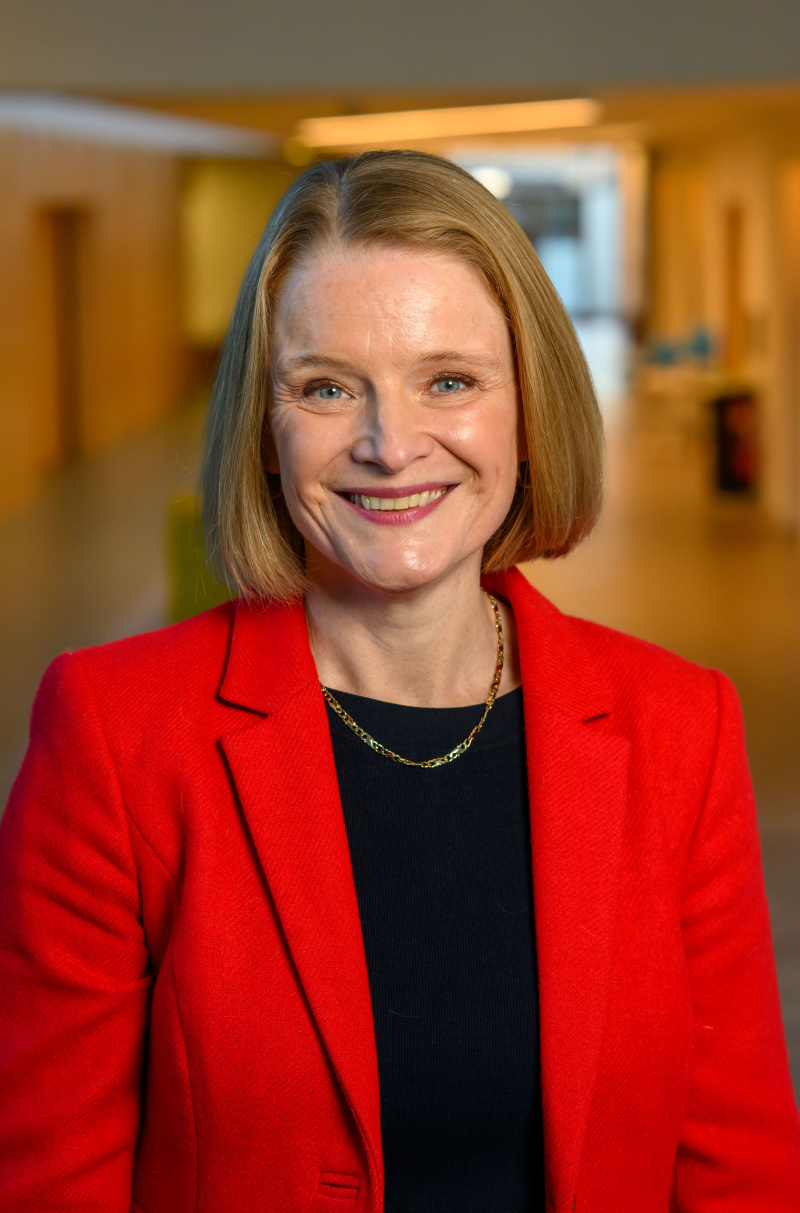
Principal: Professor Mairi Watson
Route into university
Professor Mairi Watson joined Glasgow Caledonian University as its Principal and Vice-Chancellor on 2 February, 2026.
Academic Specialism
Organisational Behaviour (Organisational Change).
Concise career profile
Prior to joining GCU, Professor Watson was the Deputy Vice-Chancellor at the University of Hertfordshire, and its former Pro Vice-Chancellor for Education and Student Experience.
A Professor of Learning and Teaching and a Principal Fellow of the Higher Education Academy, Professor Watson is recognised for her strategic leadership in academic practice and her contribution to high-quality student learning.
Before joining Hertfordshire, she was Dean of the Faculty of Business and Law at the University of Northampton and began her academic career at De Montfort University as a Senior Lecturer in Organisational Behaviour and Human Resource Management.
Originally from Airdrie, Professor Watson holds an LLB (Hons) from the University of Edinburgh, an LLM in Criminology and Criminal Justice from King’s College London, an MBA from the Open University, and a PhD in Organisational Behaviour (Organisational Change) from De Montfort University.

Glasgow School of Art
Director and Principal: Professor Penny Macbeth
Route into university
Penny joined The Glasgow School of Art in May 2020 as its new Director and CEO. Before that, Penny was Dean of Manchester School of Art and Deputy Faculty Pro-Vice-Chancellor for Arts and Humanities focusing on external engagement and partnerships.

Academic Specialism
Textiles.
Concise career profile
During her time at Manchester Metropolitan, Penny acted as academic lead for the University’s ground-breaking School of Digital Arts: SODA, which is due to open in 2021. Penny continues as board trustee of Castlefield Gallery and as board trustee of CHEAD (Council for Higher Education in Art and Design). On behalf of CHEAD she represents the sector on the All-Party Parliamentary Group for Crafts.
Penny is an active researcher and her work explores cloth’s potential as a carrier of narrative and catalyst for community empathy and cohesion. In March 2018 she co-convened the International Conference Textile and Place with colleagues from Manchester School of Art and The Whitworth Art Gallery. She presented a paper entitled ‘A Matter of Life and Death’ exploring what we might understand by socially engaged or socially enacted textiles. This paper has subsequently been published in a special edition of Textile: The journal of cloth and culture and a companion piece ‘Transcendental Beings: Clothing the Soul’ was commissioned by the Whitworth Art Gallery, for the exhibition catalogue to accompany the exhibition Ancient Textiles of the Andes.

Heriot-Watt University
Principal: Professor Richard A Williams CBE
Route into university
Richard was a first in his family generation to enter higher education on a sandwich-style industrial degree in the mining sector in Scandinavia and South Africa. He undertook a PhD working with De Beers Diamonds. Alongside his later career in HE he has worked in his own company start-ups in four locations in UK and USA.

Academic Specialism
Minerals and energy engineering.
Concise career profile
Professor Richard A. Williams was appointed Principal and Vice Chancellor of Heriot-Watt University in September 2015. The University operates from five locations in Edinburgh, Galashiels, Orkney, Dubai and Putrajaya in Malaysia.
Professor Williams is an engineer and entrepreneur with a background in minerals and energy engineering. He has extensive interests in the funding and deployment of radical environmental innovations. He is an Academician of The Royal Academy of Engineering, The Australian Academy of Technological Sciences and Engineering and is an Honorary Professor of the Chinese Academy of Sciences. He was appointed an OBE for services to science and engineering in 2008. He serves as Vice President of The Royal Academy of Engineering and is an elected Trustee of the Academy. He has worked on inter-governmental bodies relating to energy storage technology and policy and STEM education.
He is a graduate of Imperial College London (BSc(Eng), PhD) and has held academic posts as a chemical engineer at Manchester (UMIST), and the Universities of Exeter, Leedsand Birmingham. As Pro Vice Chancellor at Leeds and Birmingham he held major responsibilities for work in Asia, Middle East, South America and Malaysia. He was a founding operational director of the Manufacturing Technology Centre Catapult (2011-2015) in Coventry and, formerly, as an active elected member of the CBI Council.

University of the Highlands and Islands
Principal: Vicki Nairn
Route into university
Vicki grew up in Lancashire and was the first in her family to attend university. Vicki attended the local comprehensive school where she was inspired by great teachers, and soon developed a passion for learning. She went on to read Classics and English Literature at Swansea University. Vicki is passionate about promoting access to education and using philanthropy to support students on their learner journeys.

Academic Specialism
Vicki has held several roles across further, higher and clinical education, including Vice Principal Corporate Operations, at Robert Gordon University and Chief Executive of the RGU Foundation focused on engagement and philanthropy. Vicki has also been independently appointed to the boards of the Glasgow School of Art, UHI and most recently a ministerial appointment to NHS Education for Scotland which leads on clinical education across Scotland. Vicki specialises in engagement, strategy, partnerships, leadership, transformation, and innovation.
Concise career profile
In addition to her higher education experience, Vicki has also worked extensively across the private and public sectors including working with global multinationals BP and BAE Systems on joint ventures, major commercial developments, research and partnership programmes across the UK, US and Asia. Vicki was also a founding member of an innovation start-up which grew to £50m over a five-year period, together with holding senior executive leadership roles in local, central government and the NHS. During her employment with local government, Vicki acted as an advisor to the Scottish Government, supporting cross-party working groups and providing expert advice on public sector transformation, remote and rural strategic issues and education policy.
Vicki is a chartered fellow of the Chartered Institute of Procurement and Supply, specialising in strategic partnerships and clinical commissioning, and is a member of The Chartered Institute of Public Finance and Accountancy.

Open University in Scotland
Director: Martin Boyle
Route into university
Martin was the first in his family to attend university, completing the MA(Hons) English Literature and Language degree and joint Strathclyde University/Glasgow Caledonian University postgraduate diploma in Journalism.

Academic Specialism
Journalism, Media and Education.
Concise career profile
Martin became Director of the Open University in Scotland in April 2025 following a brief stint as Depute Director (Strategy, Planning and Resources). Prior to arriving at the OU in 2024, he was Executive Director of the Glasgow Colleges’ Regional Board, serving as accountable officer for the strategic planning, funding, and monitoring of the Glasgow college system.
He has also worked in education with a senior role at the Scottish Qualifications Authority (SQA), as a Creative Industries faculty head, Education Scotland associate assessor, and senior lecturer in journalism and media.
Prior to his work in the education sector, Martin worked in the media as a journalist across print, broadcasting and online. He has also served as a Director of Kilmarnock Football Club.

Queen Margaret University Edinburgh
Principal: Sir Paul Grice
Route into university
Paul grew up in York. He has a deep-felt personal commitment to widening participation in higher education having come to university through further education college.

Academic Specialism
Before joining Queen Margaret University (QMU), Paul had a number of roles in higher education governance. Beginning with a role on the Court of the University of Stirling, his higher education roles have included membership of the Economic and Social Research Council (ESRC), board membership of Policy Scotland at the University of Glasgow, and fellowships of the Royal Society of Edinburgh (RSE) and of the Centre for Science and Policy at the University of Cambridge.
Concise career profile
Paul joined the Civil Service through the “Fast Stream” in 1985. He worked for the Department of Transport and then the Department of the Environment on bus deregulation, railways policy and local government finance. Paul joined the Scottish Office in 1992 working on housing and urban regeneration policy, then management of change. In May 1997 he joined the Constitution Group with responsibility for the Referendum on establishing the Scottish Parliament, and subsequently managed the Scotland Act which laid the new constitutional framework.
He then held the position of Clerk and Chief Executive of the Scottish Parliament from its inception in 1999 until he joined QMU, leading the delivery of all services to the Parliament alongside acting as its principal adviser on procedural and constitutional matters.
He was knighted in the New Year Honours List 2016 for services to the Scottish Parliament and voluntary services to higher education and the community in Scotland.

Robert Gordon University
Principal: Professor Steve Olivier
Route into university
Steve was the first of his family to go to university. He didn’t initially qualify for university entrance, primarily due to concentrating on rugby at school, and spent some time in the army before receiving exemption to attend university. He studied at Rhodes University in South Africa, focusing on Philosophy, History, and Sports Science. His PhD was on research ethics.

Academic Specialism
Applied Ethics.
Concise career profile
Steve became Principal and Vice-Chancellor of Robert Gordon University on 1 September 2020. In his early career in his native South Africa, Steve worked at Rhodes University, the University of Cape Town, and the University of Zululand. He then worked as a Head of Department at Edge Hill and Northumbria universities in England before moving through the ranks at Abertay University in Scotland as Head of School, Pro Vice-Chancellor and Deputy Vice-Chancellor. He then moved to the position of Provost and DVC at the University of the West of Scotland.
He serves on several Scottish and UK national educational bodies. A passionate advocate of what he labels the ‘curiosity imperative’, he believes that the primary function of universities is to inculcate a spirit of curiosity in students. This leads to him still being engaged in research in a variety of areas of interest, most notably in ethics.

Royal Conservatoire of Scotland
Principal: Professor Jeffrey Sharkey
Route into university
Jeff left High School early to enroll at University of Delaware. Then attended Manhattan School of Music, Yale and Cambridge Universities.

Academic Specialism
Piano, Composition, Performing Arts and Academic Administration.
Concise career profile
RCS Principal since September 2014, pianist and composer Jeffrey Sharkey was previously Director of Johns Hopkins University’s Peabody Institute and Dean of the Cleveland Institute of Music.
Jeff spent the first 13 years of his career in the UK, as Head of Academic Music and Composition at Wells Cathedral Schooland then as Director of Music at the Purcell School. He has also performed, recorded and toured extensively in Europe and the USA with the Pirasti Piano Trio, and is in demand as a chamber music coach, regularly giving masterclasses.

Scotland's Rural College
Principal: Professor Wayne Powell
Route into university
Wayne was born in a small mining village, Abercraf, in the Swansea Valley and was the first member of his family to attend University.

Academic Specialism
Plant genetics and breeding.
Concise career profile
World leading plant scientist Professor Wayne Powell became Principal and Chief Executive of Scotland’s Rural College (SRUC) in 2016. A land-based HEI SRUC delivers a diverse portfolio of services including research, education, training, disease surveillance and consultancy from its six campuses, labs and farms, veterinary investigation centres and local consultancy offices.
Prior to SRUC Professor Powell was Chief Science Officer at the CGIAR Consortium, an international partnership organisation focussing on agricultural research for development in areas such as cereals, agroforestry, livestock and climate change. He developed a research programme addressing the sustainable development agenda of healthy diets from sustainable food systems. This $1 billion programme involved 10,000 staff based in over 100 countries.
Professor Powell had previously spent six years as the Director of the Institute of Biological, Environmental and Rural Sciences (IBERS) at Aberystwyth University. He was also Director of the National Institute of Agricultural Botany(NIAB) in Cambridge, as well as Deputy Director of the Scottish Crop Research Institute (now the James Hutton Institute).

University of St Andrews
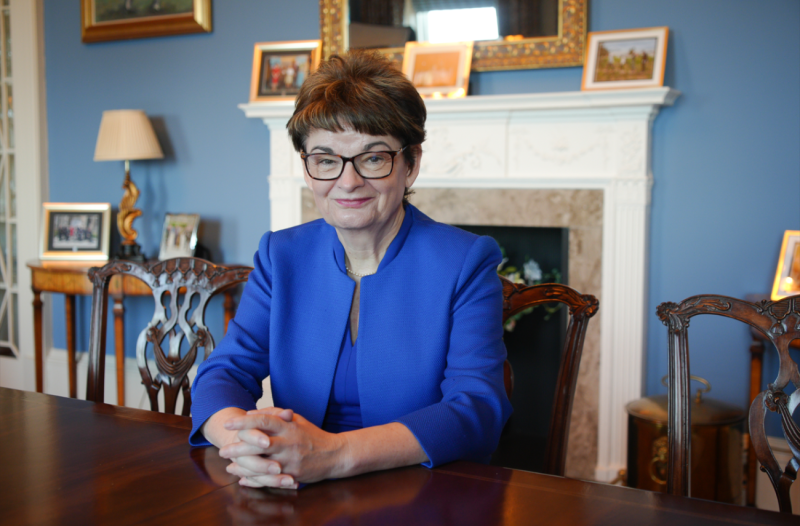
Principal: Professor Dame Sally Mapstone
Route into university
Sally attended her local grammar school in West London, and from there went up to Wadham College, Oxford – Wadham was one of the first Oxford colleges to become co-educational.
Academic Specialism
Older Scots Literature.
Concise career profile
Professor Sally Mapstone joined the University of St Andrews as Principal and Vice-Chancellor in September 2016. She had previously served as Pro-Vice-Chancellor for Education and as Pro-Vice-Chancellor for Personnel and Equality at the University of Oxford. She maintains a strong interest in issues both of access and of diversity within the HE sector.
Sally gained her BA and D.Phil. at Oxford. After completing her BA she worked for three years in London for the publisher Weidenfeld and Nicolson, and then went back to Oxford to do her Master’s and D.Phil, at Wadham and then atSt Cross College. She first joined St Hilda’s College as a Junior Research Fellow, later a Professor of Older Scots Literature in the Faculty of English Language and Literature, and then stayed for a further 30 years at the college as Official Fellow. St Hilda’s was the last women’s college at Oxford to admit men.
She is an expert on the literature of Scotland before 1707, and has published widely on literature both in Scots and in Latin, on political literature, and on book history. Earlier in her career she worked as an editor in the book publishing industry. She is Honorary President of the Scottish Text Society, an Honorary Fellow of the Association for Scottish Literary Studies, and a Fellow of the English Association.
Professor Mapstone also has a long-standing engagement in European issues and has served on the steering group for the League of European Research Universities community of Vice-Rectors for Teaching and Learning; she is a member of the international advisory board for the University of Helsinki.

University of Stirling
Principal: Professor Sir Gerry McCormac
Route into university
First in his family to attend university.

Academic Specialism
Space Physics, Carbon Dating, Climate Change.
Concise career profile
Professor Sir Gerry McCormac became Principal and Vice-Chancellor of the University of Stirling in May 2010. He is a scientist with research interests in both space physics and carbon dating.
His early career was spent at the University of Michigan, where he worked on the NASA Dynamics Explorer satellite program. He subsequently headed up the high-precision carbon dating facility at Queen’s University Belfast. He became Pro-Vice Chancellor at Queen’s in 2001 to 2010, with responsibility for Academic and Financial Planning, Economic Development and External Affairs.
He is a former Vice-Convenor of Universities Scotland Funding Policy Group (FPG), a board member of UCEA, chairman of the UCEA Scottish Committee, and a Trustee of the Carnegie Trust. He is a fellow of the Society of Antiquaries (FSA), the Higher Education Academy (HEA) and the Royal Society of Arts, Commerce and Manufacturers(FRSA). He chaired a review of teacher employment in Scotland for the Scottish Government in 2011. In 2015/16 he served as an advisor to the NI Government during the merger of departments that created the Department for the Economy (DfE).

University of Strathclyde
Principal: Professor Stephen McArthur
Route into university
Stephen joined the University of Strathclyde as an undergraduate student in 1988, went on to gain a PhD in 1996 and subsequently was appointed as an academic member of staff.

Academic Specialism
Intelligent Energy Systems.
Concise career profile
Professor Stephen McArthur was appointed Principal & Vice Chancellor of the University of Strathclyde in 2025. He is an internationally recognised expert in AI, data science and decision support for energy systems and smart grids. He has a significant track record in creating and leading academic interdisciplinary research, knowledge exchange and innovation programmes and centres.
Professor McArthur won the 2021 IEEE Richard Harold Kaufmann Award for outstanding contributions in industrial systems engineering, “for innovative contributions to the advancement of intelligent systems for power engineering applications”.
As co-founder and CTO of Bellrock Technology, he oversees Deckchair.ai – an advanced data analytics product used across multiple industry sectors.
Professor McArthur is a Fellow of the Royal Society of Edinburgh, the Institute of Electrical and Electronics Engineering (IEEE) and the Institute of Engineering Technology (IET). He is also a member of the board of Scottish Enterprise and a member of the National Energy System Operator (NESO) Engineering Advisory Council.

University of the West of Scotland
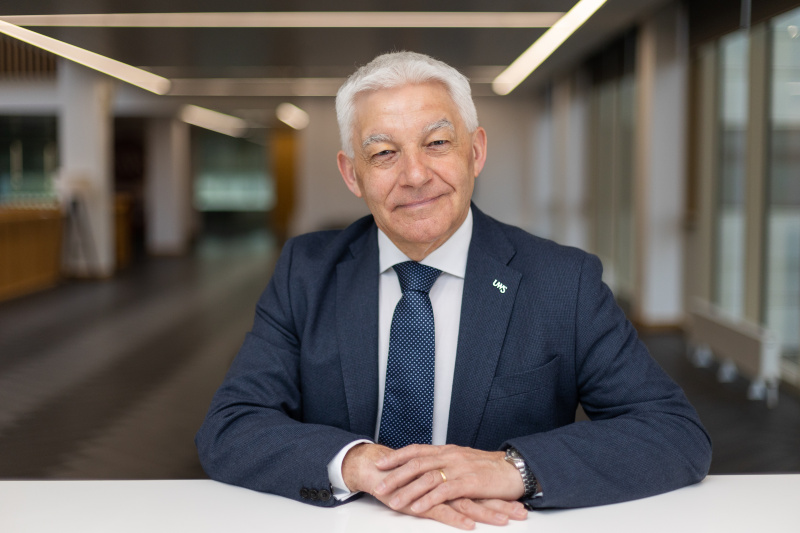
Principal: Professor James Miller
Route into university
Professor James Miller was appointed as Principal and Vice-Chancellor of University of the West of Scotland (UWS) in November 2022.
Academic Specialism
Nursing.
Concise career profile
Professor James Miller FRSE was appointed as Principal and Vice-Chancellor of University of the West of Scotland (UWS) in November 2022.
Beginning his career as a clinical nurse in Edinburgh, Professor Miller is the first nurse to be appointed as a University Principal and Vice-Chancellor in Scotland – bringing a wealth of experience, values and vision closely aligned with that of UWS.
Professor Miller has also held a series of roles in healthcare, including Deputy Director of Nursing for West Lothian Healthcare Trust and Divisional General Manager in South Glasgow University Hospital NHS Trust.
After completing his registration at North Lothian College of Nursing and Midwifery in 1986, Professor Miller undertook a post registration degree at what is now Abertay University. He also has an MBA from Edinburgh Napier University, a PhD from the University of Edinburgh and is an alumnus of Harvard University’s Institute of Education Management.
Professor Miller has been a visiting lecturer at four Scottish universities, teaching on undergraduate and Masters programmes in nursing, healthcare management and clinical leadership. He has published in peer-reviewed national and international journals on a range of clinical and management issues in healthcare and is a regular reviewer for several journals.
Professor Miller was Deputy Vice-Chancellor of Glasgow Caledonian University from August 2015 to November 2022 and previously held a range of other senior roles, including Director of the Open University in Scotland and Chief Executive of the Royal College of Physicians and Surgeons of Glasgow. He is also a Fellow of the Royal Society of Medicine, a member of the International Advisory Board for the Amity University Group in India, and was a founder member of the British Council’s Digital Advisory Board.
In 2023, James was appointed a Fellow of the Royal Society of Edinburgh. He holds board positions with a range of HE associated institutions, including the Carnegie Trust for the Universities of Scotland, the Association of Commonwealth Universities Council and the Universities and Colleges Admissions Service (UCAS). James also contributes to the boards of the Scottish Chamber Orchestra and the Prince and Princess of Wales Hospice. A former Convener of Universities Scotland’s International Committee as well as the Learning and teaching Committee he was elected as the overall Convener of Universities Scotland and Vice-President of Universities UK in August 2025.
