The Scottish Government and Universities Scotland have today (Thursday 18 December) announced the launch of a new, joint process that will co-design a Framework for a successful and sustainable future for Scotland’s universities for the next 20 years.
It is the first fundamental look at how to secure the sustainability of Scotland’s universities since 2010/11. It will consider the sector’s full contribution to Scotland, with research and innovation in scope alongside teaching and skills development.
The Framework for the Sustainability and Success of Scotland’s Universities was announced to the Scottish Parliament by Ben Macpherson MSP, Minister for Further and Higher Education, earlier today. The work will explore options for ensuring a sustainable and successful future for Scotland’s 19 higher education institutions to 2045. In doing so, it will address the extent of funding challenges facing the sector and it will focus on positioning institutions ahead of the curve of a raft of anticipated changes to the nation’s demographics, its workforce needs, emerging industries and digital advancements.
Development of the Framework will be led by a steering group, co-chaired by Scottish Government and Universities Scotland. The process has cross-party support and has the backing of staff and student unions, which have been invited to help drive the direction of the work by joining the Steering Group. The Steering Group will meet for the first time in January 2026.
The Steering Group leading the Framework will deliver its work in three phases, working through the period of the May 2026 election, and present a concluding report to the next Scottish Government and Parliament in autumn 2026.
The Framework’s remit is to consider options within the publicly-funded model for undergraduate education for Scots, which recognizes the broad political consensus behind this position.
Higher Education Minister Ben Macpherson MSP said:
“I warmly welcome the launch of this joint framework, which will explore options for securing a successful and sustainable future for Scotland’s world-leading university sector.
“The Scottish Government recognises the vital role that our universities play in Scotland’s economy and wider society, and that’s why this year alone we are investing over £1.1 billion in the sector. While we deeply value and celebrate other career pathways, universities continue to be an important and popular choice for learners, with the latest figures showing that the number of young Scots securing a place at university in Scotland this year has increased to a record high.
“This Scottish Government is committed to supporting our people to fulfil their potential and ambitions, which is why we are resolute in our commitment to state-funded undergraduate tuition in Scotland, for domiciled Scots – free for the recipient and based on their ability to learn, not their ability to pay.
“I hope this collaborative, cross-party, joint framework will help build upon the strength of the sector and ensure our universities are well positioned to respond to current and future challenges, including demographic shifts, international competition, technological advancements, and the changing needs of students and the economy. We must work together to succeed in the decades ahead.”
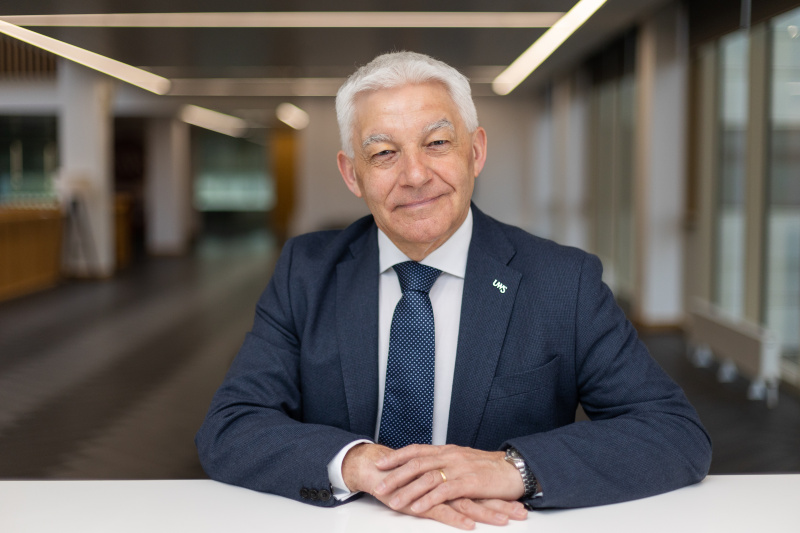
Commenting on the launch of the Framework, Convener of Universities Scotland, Professor James Miller, said:
“Scotland’s higher education sector is one of the nation’s greatest strategic assets. Our universities underpin Scotland’s economic prosperity, public services, research and innovation capacity and global reputation. While the sector is facing profound and disruptive financial pressures, this moment also presents a vital opportunity: to work in genuine partnership with government to shape a more resilient, sustainable and fully funded future for higher education in Scotland.
“This Framework represents a shared commitment to co-design a long-term vision that is ambitious, proactive and grounded in realism about the scale of change ahead. It is an opportunity to take control of the agenda, to align funding, purpose and impact, and to ensure our universities remain able to deliver for Scotland in the decades to come. The sustainability, success and public value of the sector will be the guiding principles for this work.
“This work is urgent. Looking ahead with clarity and ambition, the Framework will help determine not only the future of Scotland’s universities, but also help shape the future of the country’s skilled workforce, its NHS, its economy and its full innovative potential. Funding will be a critical component, but equally important is a shared understanding of what Scotland will need from its universities twenty years from now, and how we collectively get there.
“This work will engage deeply with stakeholders and address difficult but necessary questions. I welcome the constructive engagement so far from the Scottish Government, political parties across the spectrum, and our staff and student representatives, whose commitment reflects the importance of this opportunity for Scotland’s long-term future.”
Scotland’s political parties are asked to take the opportunity to recommit to the Framework process and its outputs in their manifestoes for the 2026 election.
NOTES:
- The full title of the shared initiative is the Future Framework for the Sustainability and Success of Scotland’s Universities. Abbreviated to: Future Framework for Universities.
- Minister Macpherson MSP and Professor James Miller, Universities Scotland’s Convener, have co-commissioned the Framework. The Co-Chairs of the Steering Group and its full membership will be announced in January ahead of the Group’s first meeting.
- The Framework is expected to deliver outputs from each pillar, working through the 2026 election period, and produce a final report in autumn 2026.
- Details on the focus of each pillar is as follows:
Pillar 1: Winter to spring 2026.
- Will build a robust, evidence-based understanding of how Scotland’s universities are funded, and where gaps exist between the true cost of delivering teaching, research, and capital infrastructure and the available investment from public and private sources.
- Will examine the future role, needs, and purpose of Scotland’s universities within a changing national and global context to 2045. This will consult widely with universities’ stakeholders.
Pillar 2: Early spring to summer 2026
- Will develop a sector-led understanding of efficiency and transformation across Scotland’s universities, identifying what the sector is already doing to drive down costs and operate more effectively, and where deeper, structural reform could deliver long-term sustainability and how this could be supported by Government.
Pillar 3: Summer to autumn 2026
- Will draw on the insights from pillars 1 and 2 to develop modern, evidence-driven policy solutions which ensures Scotland’s universities are sustainable, competitive, and aligned with long-term national priorities.